

What is an SCT?
A specialised care team (SCT) is a multidisciplinary group of professionals who provide expert, tailored care services to individuals with acute, complex needs.
When UK-Med is deployed as the UK Emergency Medical Team (UK EMT) we can also send our WHO–verified Rehabilitation Specialised Care Team (Rehab SCT). UK-Med as the UK EMT was the first organisation globally to be designated as a Rehabilitation SCT by the World Health Organization (WHO). As of today, we are also the most globally deployed Rehab SCT.
Rehabilitation continues to be an integral part of UK-Med responses. Early intervention can make a big difference when it comes to long-term functionality and independence for patients.
What are the benefits of being a WHO–verified Rehabilitation Specialized Care Team?
Early integration – Being an SCT allows the integration of rehabilitation as early as possible in emergencies, maximizing the outcomes and impact the overall response will have on patients’ physical, emotional, and social functioning and wellbeing.
Expertise – Verification attracts skilled and experienced register members wanting to contribute to a globally recognised emergency medical team, with a reputation of high-quality rehabilitation activities.
Resources – Ensures sufficient resources available to deliver high-quality rehabilitation activities.
Awareness – Provides opportunities to increase awareness of the importance and role of early rehabilitation in emergencies.
Advocate – Offers a mechanism to advocate with host governments and national and international stakeholders for a rehabilitation–centred emergency response.

How is a Rehabilitation Specialized Care Team different from “normal” rehab?
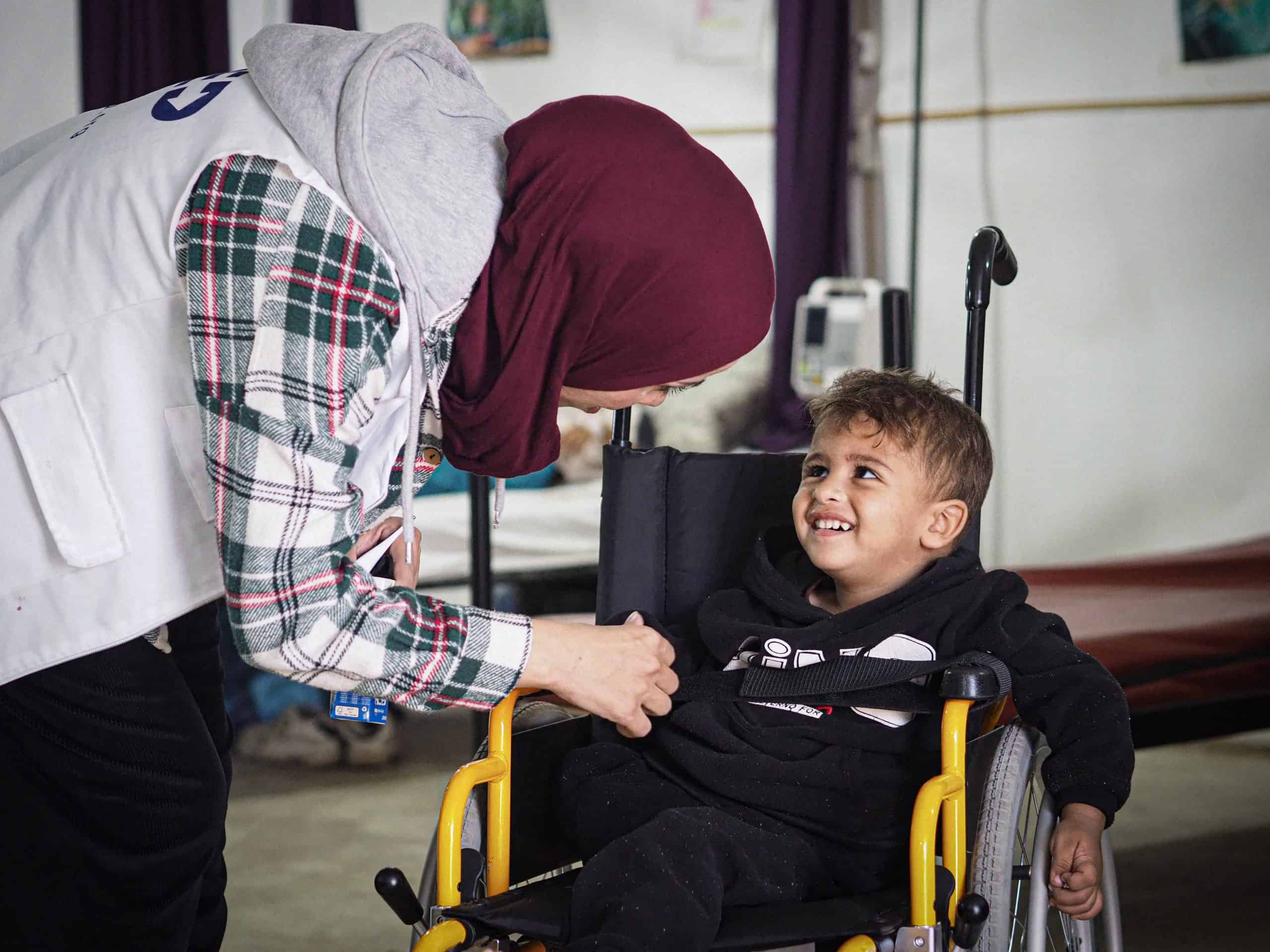
A Rehab SCT is designed to make sure patient recovery is at the forefront of the response. While a large part of UK-Med’s role is to save lives in emergencies, it is vital we are also able to ensure patients are equipped with the ability to continue living their life fully in the future, and have the tools to do so even after we leave, be that equipment, self-management techniques, exercises, knowledge, and access to ongoing rehabilitation by national actors.
A Rehab SCT:
- Works in disaster, conflict, outbreak, and surge settings – The UK EMT has significant experience deploying as a Rehab SCT and utilising the wide variety of rehabilitation interventions designed to optimize functioning and reduce disability
- Operates in field hospitals and temporary facilities, as well as embedded into national hospitals – UK-Med has experience delivering culturally responsive rehabilitation services and training activities working within the local community to strengthen rehabilitation national systems
- Brings its own equipment and systems – UK-Med currently has 85 types of specialist equipment ready to deploy rapidly and maximize function in emergency contexts
- Works alongside national healthcare staff with an emphasis on skill exchange – UK-Med recognizes that rehabilitation can be effectively provided by many including multidisciplinary healthcare staff, patients, family members, and community members
- Integrates into EMT clinical pathways – UK-Med provides quality rehabilitation services, from the point of someone being admitted to the point they are discharged having the tools to continue their functional restoration.

A Rehabilitation Specialized Care Team in practice – UK EMT response to Lebanon 2025
Between October 2024 – March 2025 the UK EMT deployed to Lebanon to support the establishment of the country’s first national public burn hospital, in response to the escalating conflict along Lebanon’s southern border, which had displaced thousands, damaged infrastructure, and severely strained the healthcare system.
During the response the team delivered early rehabilitation for complex trauma and burn injuries as well as delivering nationwide skills exchange, with most patients showing significant improvements in functional independence.
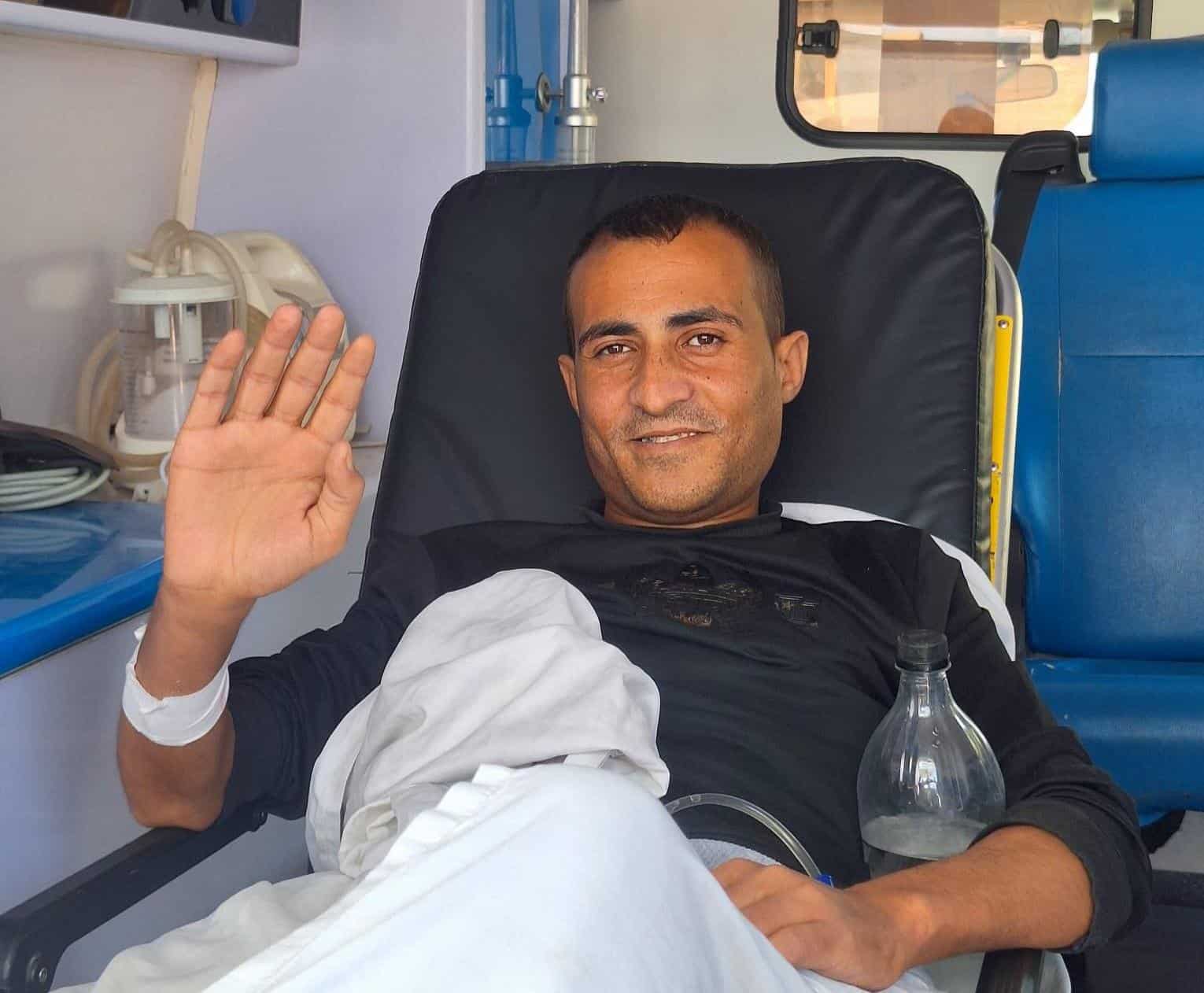
One patient was caught in an air strike as he was driving his bus across the Lebanese-Syrian border. With severe injuries in both his right elbow and right leg, he initially struggled to participate in rehabilitation services, experiencing substantial pain.
Doctors, nurses, physiotherapists and psychologists, from across different organisations and the national staff all worked closely to adjust his rehabilitation management. As a result, he began to participate more often and with more enthusiasm. He was later discharged from the hospital being able to adjust his position in bed, sit on the edge of bed, transfer himself to a wheelchair and move around in the wheelchair independently.